
Public Economics Curriculum Focusing on African Policy and Research
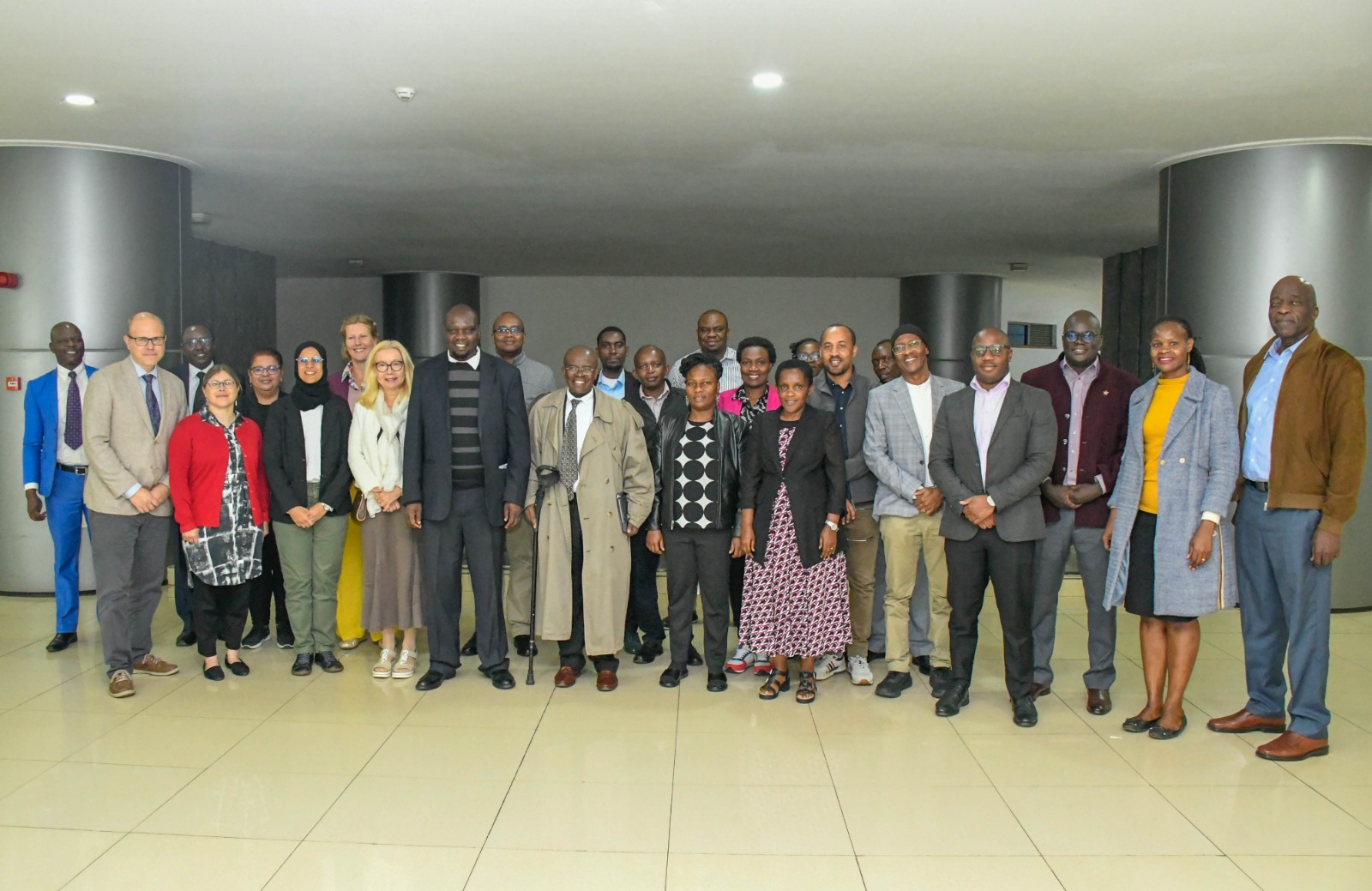
Public_Economics_Curriculum
The Department of Economics and Development Studies, University of Nairobi, in partnership with other institutions, within the framework of an African-Finnish partnership, has launched a new public economics curriculum tailored to African universities. The curriculum offers students and lecturers high-quality teaching materials grounded in African policy realities, institutions, and empirical evidence.
The curriculum was produced through the African-Finnish Partnership on Taxation Capacity in Africa (AFP–TCA) programme in cooperation with numerous partners. The programme is funded by the Ministry of Foreign Affairs (MFA) of Finland, administered by the Finnish Institute of Public Management (HAUS), and implemented by VATT Institute for Economic Research (VATT), which serves as the lead implementing partner for Outcome 2 — the research and curriculum development component of the programme.
The curriculum supports universities in strengthening teaching and learning in public economics, particularly in taxation, public spending, and fiscal sustainability. It responds to increasing demand from African universities for materials that reflect the continent’s economic structures, development priorities, and growing body of applied research.
“Recent years have seen rapid growth in high-quality empirical research on public policy in African countries,” said Professor Jukka Pirttilä, Professor of Public Economics at VATT and the University of Helsinki and Academic Coordinator of the initiative. “This curriculum brings that evidence into the classroom, linking core concepts in public economics to African institutions, data, and policy debates.”
Built for African Classrooms and Policy Challenges
Designed primarily for undergraduate-level teaching, the curriculum introduces students to modern public economics while placing African country experiences at the centre of the analysis.
A key feature of the curriculum is its strong empirical orientation. Students are introduced to contemporary applied methods and data sources, including administrative and micro-level data, enabling them to analyse how tax and spending policies operate in practice.
“The Department of Economics and Development Studies is in the process of reviewing its curriculum and participation in development and launch of this curriculum has come at the right time. It will enable our students to approach public economics in a practical manner that incorporates the African context using African data to draw empirical comparisons to what has been the norm in most textbooks which mainly focus on developed countries,” said Prof. Martine Oleche, Chairman Department of Economics and Development Studies.
A Collaborative Partnership
The curriculum developed under the AFP–TCA programme is the result of a collaborative effort involving numerous partners and contributors. As the lead institution for the research component, VATT and the curriculum academic lead, Professor Pirttilä, developed a series of lectures and organized a workshop held alongside the IIPF Annual Congress in Nairobi (August 2025) and hosted by the University of Nairobi, with support from HAUS and the African Capacity Building Foundation (ACBF). The workshop, opened by the Dean, Faculty of Arts and Social Sciences (FASS), Prof. Jack Odhiambo, enabled in-person collaboration with African and international partners, helping to ensure the relevance, credibility, and adaptability of the curriculum materials.
In addition to the partners mentioned above, contributions to lectures, exercises, and teaching materials were made by UNU-WIDER, the University of Helsinki, and the Centre for Tax Analysis in Developing Countries (TaxDev), implemented by the Institute for Fiscal Studies (IFS) and ODI Global, as well as numerous African researchers.
The curriculum is hosted on ACBF’s Ubora Academy platform and made available as an open educational resource, allowing African universities to easily adapt and integrate the materials into their own teaching.
Together, this initiative marks an important step forward in advancing public economics education in Africa—for Africa—bringing together rigorous theory, African evidence, and real-world policy relevance.

More information
Owen Nyang’oro, Department of Economics and Development Studies, owen@uonbi.ac.ke.
The curriculum (registration needed)
- Log in to post comments